Stainless steel is the undisputed standard material across the global commercial food service industry. However, many restaurant owners and procurement managers are misled by deceptive initial price quotes for kitchen equipment built with inferior metal grades. Understanding the metallurgical differences between food-grade AISI 304 and commercial AISI 201 can save you lakhs of rupees in premature equipment replacements, health inspection fines, and food spoilage.
Chemical Composition & Corrosion Resistance
The fundamental distinction lies in nickel content and elemental composition:
- AISI 304 (True Food-Grade): Contains 18% Chromium and a minimum of 8% Nickel. The high nickel content creates a stable austenitic crystalline structure that makes the steel non-magnetic and exceptionally resistant to oxidation. It withstands direct contact with acidic citrus fruits, vinegar marinades, tomato curries, and saline brine without leaching metallic ions into food.
- AISI 201 (Commercial Low-Nickel Grade): Replaces expensive nickel with manganese and nitrogen, reducing nickel to only 1% to 1.5%. While it looks identical when polished on the showroom floor, it lacks the metallurgical strength to resist harsh chemicals. Exposure to coastal humidity, moisture, and common kitchen dishwashing soaps quickly causes stress-corrosion cracking, pinhole pitting, and visible reddish rust along weld seams.
Hygiene Norms and FSSAI Compliance
Under FSSAI Schedule 4 hygiene guidelines and global HACCP mandates, all food-contact surfaces must be non-toxic, non-absorbent, smooth, and impervious to bacterial biofilm colonization. Equipment fabricated with certified SS 304 features a passive self-healing chromium oxide film that prevents bacteria, salmonella, and mold spores from embedding into surface micro-fissures. When you scrub an SS 304 worktable or sink with hot water and sanitizer, it remains 100% sterile.
Structural Rigidity & Argon TIG Welding Performance
In high-intensity commercial kitchens, tables and cooking ranges endure heavy cast-iron kadhais, 50-kg dough bins, and constant meat cleaver chopping. Certified SS 304 possesses superior ductility and tensile strength. When welded using 100% Argon TIG shielding gas, the weld seams blend seamlessly into the parent metal without carbon burn-through. In contrast, SS 201 weld joints frequently turn brittle and crack under thermal cycling from gas burners or heavy vessel impacts.
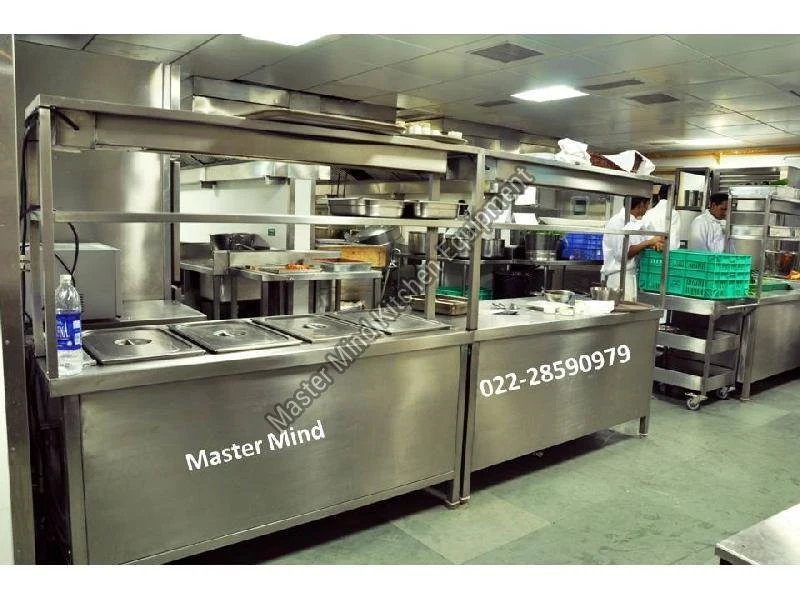
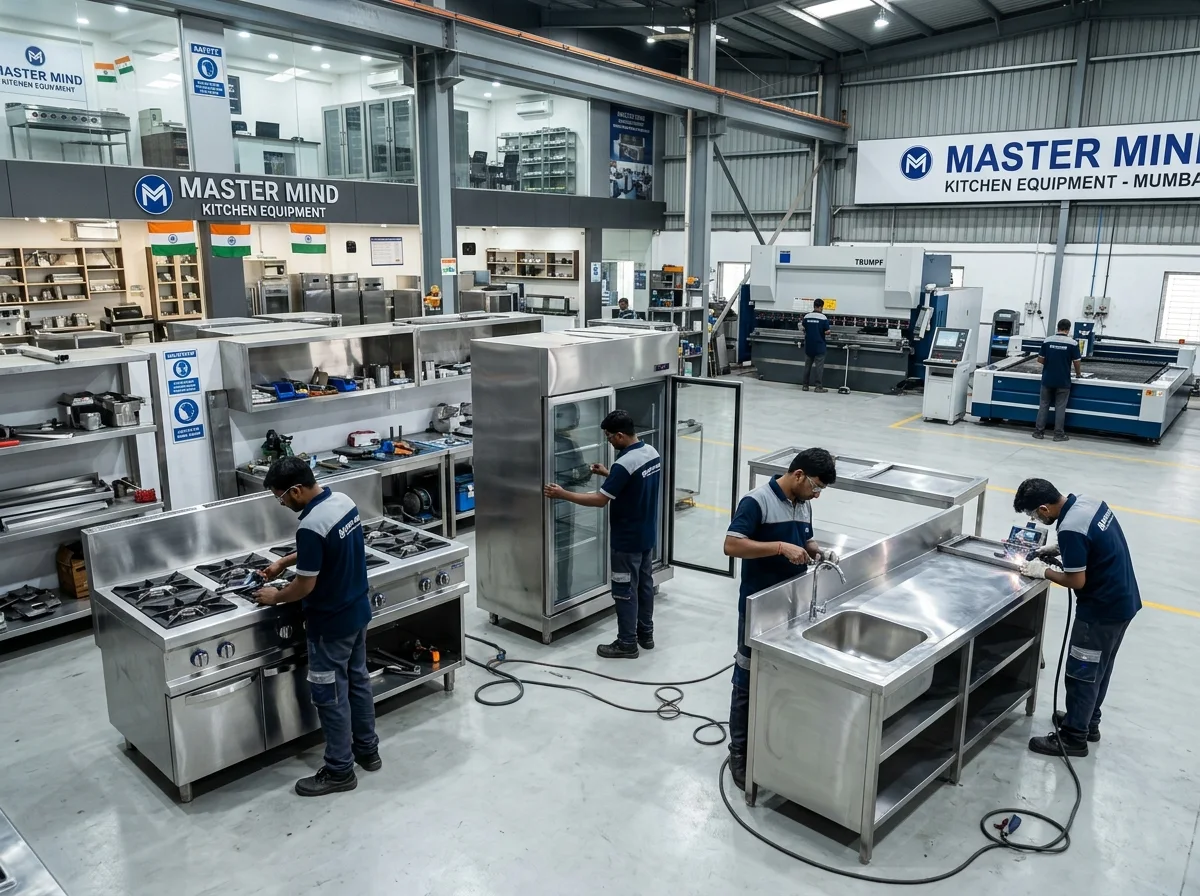
At Master Mind Kitchen Equipment, every custom work table, sink unit, bain marie, and cooking range is manufactured exclusively from prime certified AISI 304 stainless steel at our Sakinaka workshop in Mumbai, backed by comprehensive manufacturer warranty.